Winter break. ❄️ The booking office will answer your requests during office hours.

The role of wood in Ötzi’s life: Tools, bow and backpack of the Iceman
What role did wood play in Ötzi’s everyday life? Which types of wood did he choose – and why exactly those?
Elena Serina, a collaborator at the archeoParc, explored these questions and prepared an interesting contribution about the different types of wood found in the equipment of the Iceman. From the bow to the arrows and even the structure of his backpack, many of the objects that accompanied Ötzi tell the story of the great knowledge of Copper Age communities and their close relationship with nature.
Every year on March 21, the International Day of Forests is celebrated – a day dedicated to a simple, natural material that has nevertheless been fundamental in human history.
Long before metals and plastics existed, wood was already everywhere in everyday life.
If we think about Ötzi the Iceman, the man from the Similaun who lived more than 5,000 years ago, this becomes immediately clear: almost everything he carried with him was made of wood.
Wooden tools used by Ötzi
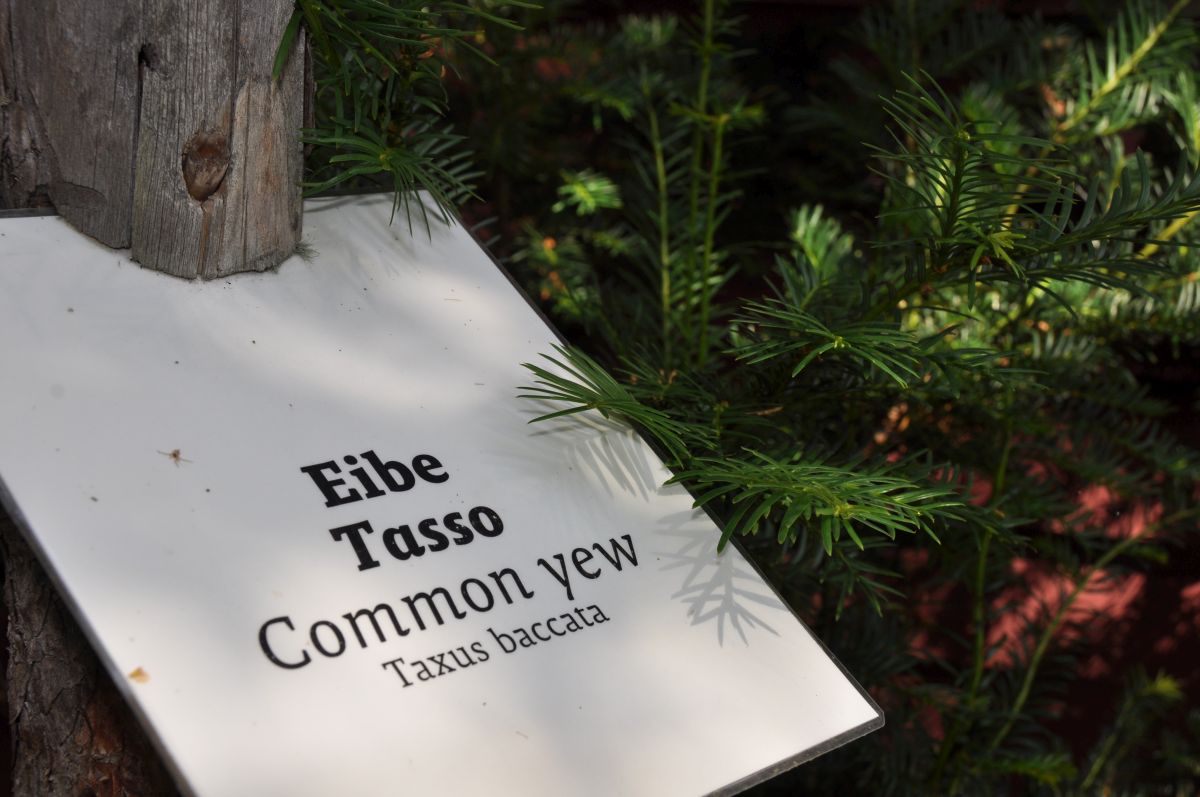
His bow, for example, was made from a long piece of yew wood, a type of wood that is very elastic and resistant – perfect for this kind of weapon.
The arrows also had wooden shafts: specifically made of viburnum, chosen because this plant produces straight and sturdy branches.
Wood was also present in smaller objects: the handle of his knife was made of ash wood, while the retoucher – the tool used to sharpen and refine flint – was made of linden wood. His quiver also had a small hazel rod along the side, perhaps to keep it straight.
Ötzi’s backpack also had a completely wooden frame: it was made from a hazel branch bent into a U-shape, with two maple slats at the ends that held the structure together. This allowed him to carry his equipment during his movements in the mountains.


Prehistoric knowledge in choosing wood
This reveals something important: Ötzi did not use wood “at random.” Each type of wood was chosen for its specific properties – an elastic wood for the bow, a strong wood for the arrows, and a light wood for the backpack frame.
In other words, prehistoric people had a deep knowledge of the forest around them. Wood was not just a material: it was a precious and indispensable resource for survival.
The South Tyrol Museum of Archaeology preserves and studies all the objects found with the mummy, including the wooden artefacts he carried with him.
Wood today: continuity and innovation
And today? What are our tools made of? Do we still use wood?
More than 5,000 years later, the International Day of Forests reminds us of exactly this: wood is still an important resource for humanity. For thousands of years it has been used as fuel and as a building material, as well as for the production of furniture, tools, paper and many other objects – including musical instruments. It continues to accompany human life, just as it did in Ötzi’s time.
Are you curious to discover how wood was worked in prehistoric times? Would you like to touch a bow and an axe like those used by Ötzi? Try on his backpack? Or even try shooting with a wooden bow like the one Ötzi was building?
We look forward to welcoming you at the archeoParc Schnalstal to experience it for yourself!